When Brian Eno first got the idea to make Ambient 1/Music For Airports, he was indeed within such a place: the Cologne Bonn Airport in Germany, to be exact. His goal was to make music to “accommodate many levels of listening attention without enforcing one in particular” according to the record’s liner notes. This music would be “as ignorable as it is interesting,” ultimately neutralizing the chaotic and tense microcosm that is an airline terminal, or as I like to call it, hell on earth.
The record itself is many things: soothing, transcendent, gorgeous, subtle…adjectives which today, almost 40 years after the release of Music For Airports, are light-years from capturing the foul, soul-sucking, hyper-capitalistic essence of even the “nicest” plane parking lots.
Eno, completely aware of the hectic, complex world of the airport, wanted to make music that addressed the specific needs of such a space, and he didn’t mince words when explaining those needs. In an interview from a few decades ago, he describes his inspiration in greater depth.
“It came from a specific experience. I was in a beautiful airport…Cologne Airport, which is a very beautiful building. Early one Sunday morning, the light was beautiful; everything was beautiful, except they were playing awful music. And I thought, ‘there’s something completely wrong that people don’t think about the music that goes into situations like this.’ You know, they spend hundreds of millions of pounds on the architecture, on everything, except the music. The music comes down to someone bringing in a tape of their favorite songs this week and sticking them in and the whole airport is filled with this sound. So, I thought it’d be interesting to actually start writing music for public spaces like that.”
While I personally feel that Eno achieved the perfect score to flight on Music For Airports, I can’t say that such an approach has been applied to actual airports. While we may no longer endure the cheesy corporate muzak or “elevator music” of the 80s and 90s (now reserved exclusively for healthcare company hold music), the sonic output of terminals remains troubling in a whole new way. Take for instance my experience at Chicago O’Hare International Airport a few weeks ago, whereupon sitting on the toilet in the Gate B bathroom I heard not Enya or Brian Eno, but “Stars of Track and Field” by Belle and Sebastian.
Come again?
This set off another memory. I was on a Delta flight to Brazil, and, being bored with the pre-takeoff formalities, decided to scroll through the in-flight music they offered. To my surprise, they not only had The Queen is Dead by The Smiths, but also Post Pop Depression, Iggy Pop’s latest record, as well as other albums by what marketing experts would deem “indies.”
Though I shouldn’t have been, I must admit I was surprised. Air travel is the last bastion (aside from perhaps hotel services and high-end dining) of the old-fashioned, uniformed business structure; the security, composure of the flight attendants, the caste system set in place by the boarding/seating matrix…the whole ambiance makes it a bit strange that they would supply passengers with Iggy Pop singing about Gardenia’s “hourglass ass.” Even though I found it both convenient and pleasurable that such tunes were available, I was also disturbed by it. Isn’t it slightly insulting to stick me in seat 23 B back by the shitter, make me pay for stale pretzels, and then pretend that you, Delta Airlines, knows about Iggy Pop?
But contrary to Eno’s airport in the ‘70s, it must be said that airlines today overthink about what is playing aboard. It isn’t breaking news that airports, which are basically glorified, overpriced shopping malls, picked up on the same marketing strategies that make us feel cool when we buy a certain brand of soap over another. The reason Delta Airlines has the new Iggy Pop record is the same reason American Airlines replaced schmaltzy muzak with “indie rock” to score-boarding and landing periods.
It’s the exact principle laid out in Commodify Your Dissent, a collection of essays from The Baffler addressing how the initial emblems of counterculture rebellion (i.e. rock music, leather jackets, tofu) have now become the tools of advertisers, CEOs, and the like. In a brilliant essay by Dave Mulcahey entitled “Leadership and You,” the author quotes Andrew Susman’s book Advertising Age:
“The inter-relationship of advertising and programming increase because customer tastes and preferences are known in advance. Programming and advertising become interchangeable, as consumers are living inside a perpetual marketing event.”
Yayyyyyyyyyyyyyy.
Perhaps Mr. Eno could resurface to make us a new beautiful record entitled: Music For Living Inside A Perpetual Marketing Event. If he’s too busy, here are a couple suggestions. When you consider what might be appropriate music for airports or airplanes, you must consider a few factors.
- Flying sucks.
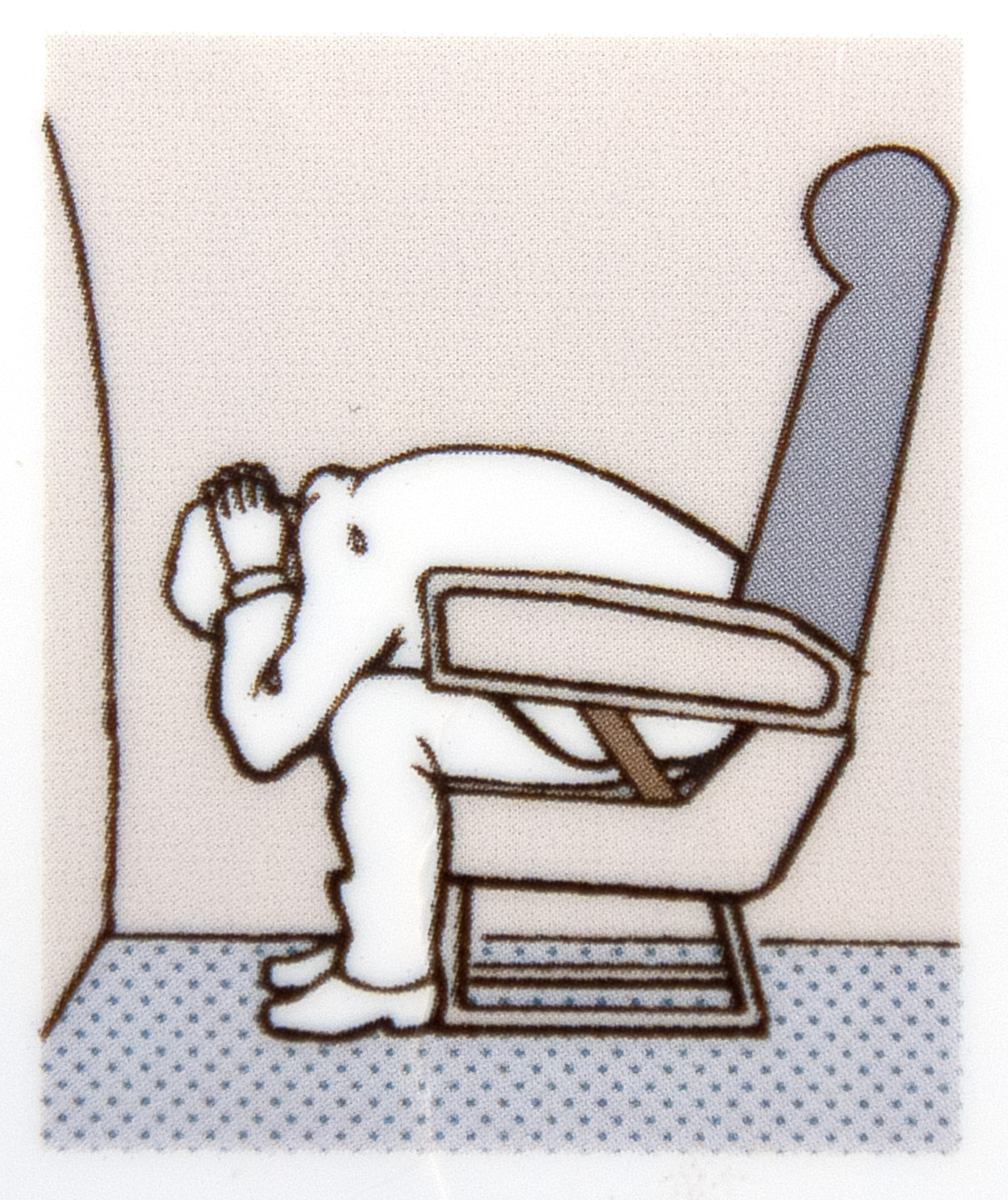
“I was thinking about flying at the time because I thought that everything that was connected with flying was kind of a lie. When you went into an airport or an airplane they always played this very happy music, which sort of is saying, ‘you’re not going to die! There’s not going to be an accident! Don’t worry!’ and I thought that was really the wrong way ‘round. I thought that it would be much better to have music that said, ‘well, if you die, it doesn’t really matter.’ So I wanted to create a different feeling, that you were sort of suspended in the universe and your life or death wasn’t so important.”Losing Altitude: Songs to Die To. Considering we can’t have free booze or even decent food (let alone free decent food) perhaps the good people of these airlines would allow some sort of in-flight access to any and all of the music you damn pleased. In the case of a loss of cabin pressure: Nils Frahm. Unexpected rough air: Kate Bush. Bird-in-propeller: Richard Hell. At the very least, airports could give spinning Music For Airports a go, because I’d sure as shit rather face my imminent mortality to that than the goddamn Lumineers. After all, Brian Eno made it just for us.